Training / FIELD NOTES 04
A baking course is more than a product list.
Twenty impressive names on a syllabus still leave an important question: what will you be able to explain and practise?
Ask how the product list connects to supervised practice, feedback and the underlying techniques.
Read for the learning arrangement
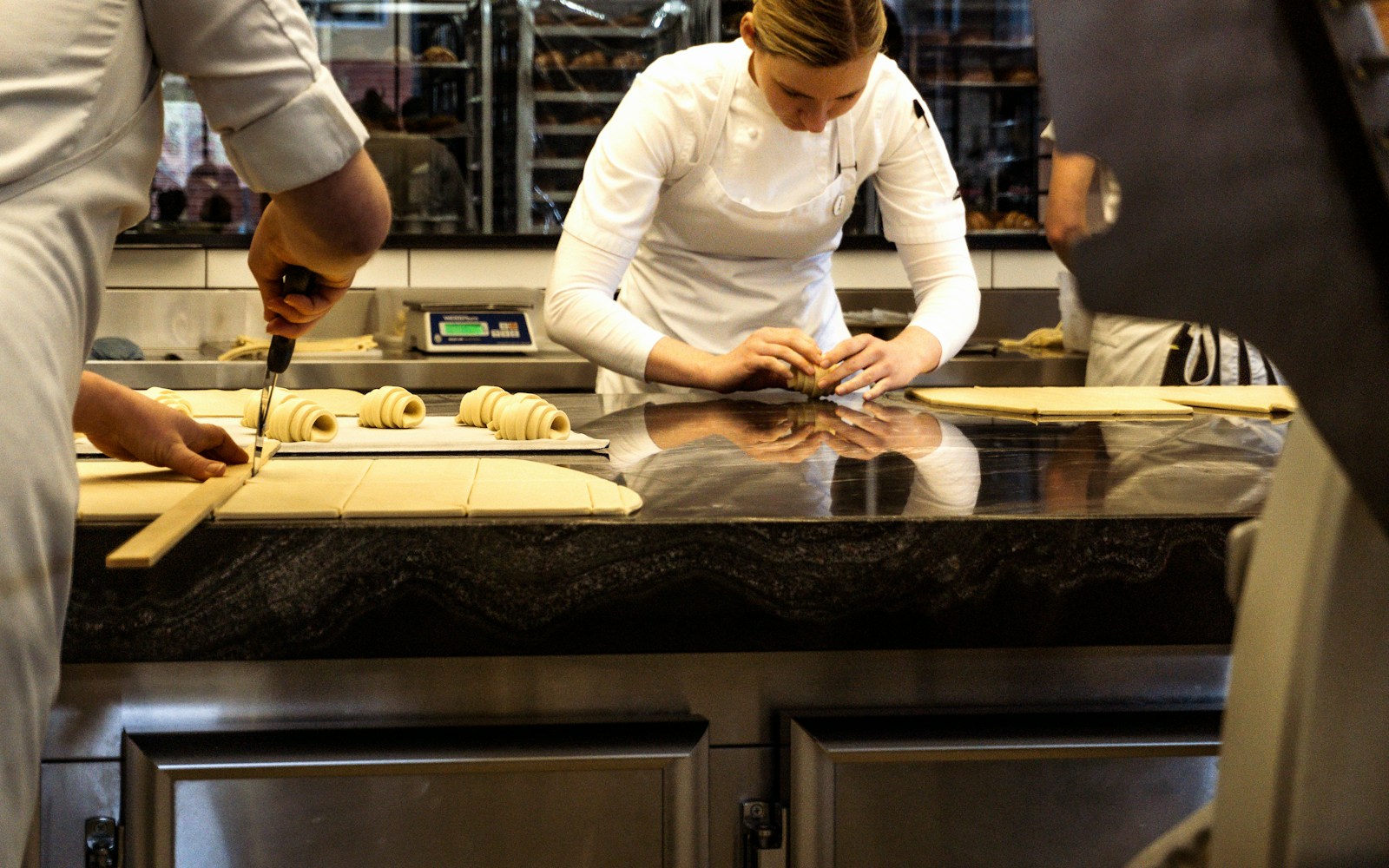
A long list of pastries can make a programme feel comprehensive. It does not tell you which tasks you will perform yourself, which you will watch and which you may only discuss. Ask the provider to distinguish these arrangements before treating the list as a record of future ability.
Choose a few products from the outline and ask how a teaching session works. How is the task introduced? What equipment is shared? Who observes the practice? How does the learner receive feedback? A concrete walkthrough can reveal more than another page of finished photographs.
Look for connections between tasks
A useful question is how the programme helps you recognise a technique when it appears in a different product. Ask whether related tasks are revisited and how a tutor explains the connection. The point is not to expect a particular syllabus structure, but to understand the logic of the one being offered.
Ask what happens when a result does not match the intended outcome. Is there time to discuss it? Can a learner repeat the relevant task? A demonstration of a polished result is different from supported practice through an imperfect attempt. Both can have a place, but they should not be confused.
Keep evidence close to the work
If you visit or speak to recent learners, ask about their own work rather than only the institution’s showcase. What did they practise, what feedback did they receive and what did they still need to work on after the course? Treat their accounts as individual perspectives.
When you make your comparison, pair the syllabus with the practice arrangements and total costs. A programme should be considered through the experience it describes, not just through the most elaborate item on the list. Keep the provider’s written answers with your notes so your decision remains traceable.
BEFORE YOU MOVE ON
Three questions to take with you.
- Which products will I make myself?
- What happens when my first attempt needs correction?
- How are the underlying techniques revisited?
This is a general decision guide. It does not verify a provider, predict earnings, assess professional competence or replace qualified technical guidance.